
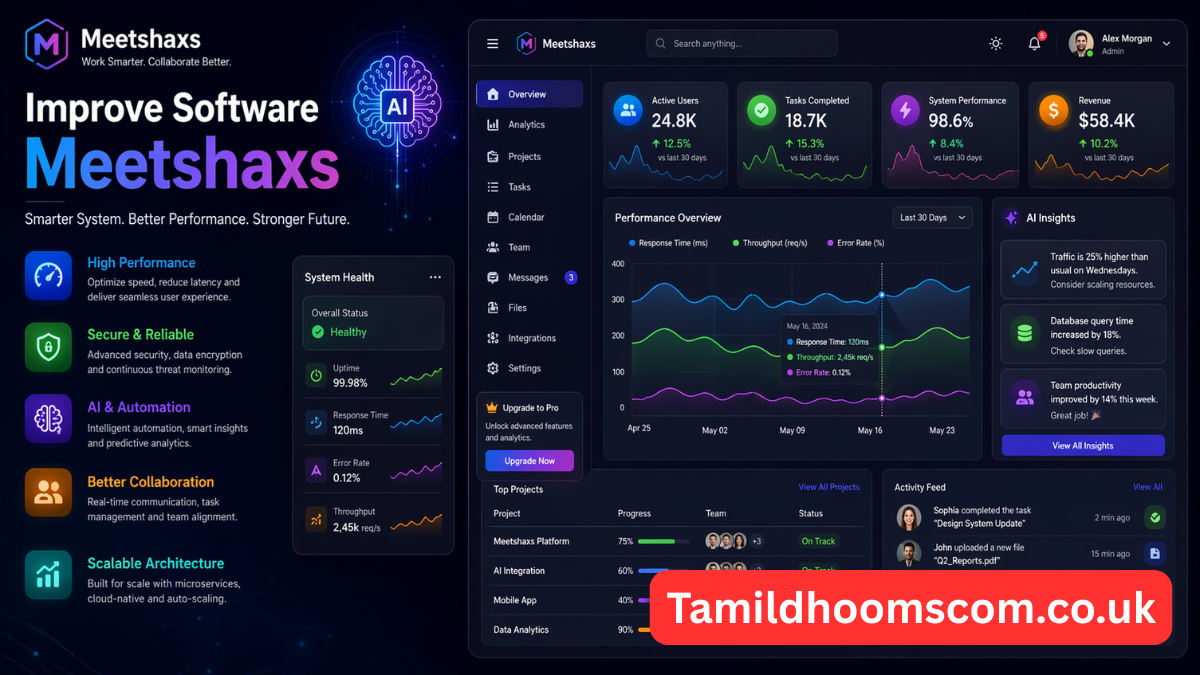
Understanding Meetshaxs Software Ecosystem
Improve software meetshaxs, as a modern software ecosystem, can be thought of as a digital collaboration and productivity platform designed to connect users, data, and workflows in a seamless environment. To improve it effectively, the first step is not jumping into features or fixes but understanding how the entire system behaves as a living structure. Every module, whether it’s communication, scheduling, file handling, or analytics, interacts with others in ways that can either create efficiency or bottlenecks.
A common mistake developers make is treating each feature as an isolated component. In reality, Meetshaxs functions like a tightly connected network where one weak link can affect the entire performance. For example, if the messaging module is slow, it may indirectly reduce productivity in project management tools because communication delays ripple across workflows. That’s why mapping dependencies is essential before making improvements.
Another important aspect is identifying user roles within the ecosystem. Not all users interact with Meetshaxs in the same way. Some rely heavily on real-time collaboration, while others use it for long-term project tracking or data storage. Understanding these behavioral differences helps prioritize improvements that actually matter instead of optimizing areas that are rarely used. This user-centric perspective becomes the foundation for all further enhancements.
Improving Core Performance and Speed
Performance is often the first thing users notice and the first thing they complain about. In Meetshaxs, improving speed is not just about making the software “feel faster” but about optimizing backend processes, reducing latency, and ensuring smooth interaction across all modules. One of the most effective ways to achieve this is by minimizing unnecessary data calls between services and caching frequently accessed data intelligently.
Database optimization also plays a massive role in improving performance. If Meetshaxs relies on large-scale data storage, poorly structured queries can slow everything down. Indexing important fields, reducing redundant joins, and restructuring tables for efficiency can dramatically improve response times. Even small improvements in query execution can lead to noticeable changes in user experience when scaled across thousands of users.
Another overlooked factor is frontend performance. Heavy UI components, unoptimized JavaScript, and excessive API calls can make the application feel sluggish even if the backend is strong. Lazy loading, code splitting, and compressing assets are simple yet powerful techniques that can significantly enhance responsiveness. The goal is to ensure that users feel instant interaction, even if complex processes are happening behind the scenes.
Enhancing User Experience and Interface
User experience in Meetshaxs is not just about making things look good—it’s about making everything feel intuitive. A well-designed interface reduces cognitive load, meaning users don’t have to think too hard about what to do next. To achieve this, consistency in design elements such as buttons, menus, and navigation patterns is crucial. When users learn one part of the system, they should be able to apply that knowledge everywhere else.
Another major improvement area is personalization. Modern users expect software to adapt to their preferences rather than forcing them into a rigid structure. Meetshaxs can benefit greatly from customizable dashboards, theme options, and adaptive layouts that change based on user behavior. For example, a project manager might see task tracking widgets first, while a developer might prioritize code-related integrations.
Accessibility is equally important and often underestimated. Ensuring that Meetshaxs is usable for people with different abilities not only expands the user base but also improves overall usability for everyone. Clear typography, proper contrast, keyboard navigation, and screen reader support are no longer optional features—they are essential components of a professional-grade application.
Strengthening Security and Data Protection
Security is one of the most critical pillars of any software system, and Meetshaxs is no exception. As data flows between users, servers, and third-party integrations, every entry point becomes a potential vulnerability. Strengthening authentication mechanisms is the first step. Multi-factor authentication, secure session handling, and token-based access control can significantly reduce unauthorized access risks.
Data encryption is another non-negotiable aspect. Both data at rest and data in transit should be properly encrypted using modern standards. This ensures that even if data is intercepted or exposed, it remains unreadable without proper decryption keys. Regularly updating encryption protocols is also important because outdated algorithms can quickly become vulnerable.
Security is not a one-time implementation but an ongoing process. Regular penetration testing, vulnerability assessments, and code audits help identify weak points before they are exploited. In a system like Meetshaxs, where multiple integrations may exist, even a small overlooked API endpoint can become a major security risk if not properly monitored.
Integrating AI and Automation Features
Artificial intelligence can transform Meetshaxs from a simple productivity tool into an intelligent assistant that actively helps users work smarter. One of the most practical applications is automating repetitive tasks such as scheduling, data entry, and report generation. By analyzing user behavior, the system can suggest actions or even execute them automatically with permission.
AI-powered search functionality can also greatly improve usability. Instead of manually navigating through menus or files, users could simply describe what they need in natural language. Meetshaxs could then interpret the request and fetch relevant results instantly. This reduces friction and saves time, especially in large organizations with complex data structures.
Another powerful area is predictive analytics. By analyzing historical usage patterns, Meetshaxs can forecast workload trends, identify potential bottlenecks, and even suggest optimal resource allocation. This transforms the software from a reactive tool into a proactive system that helps users make better decisions before problems arise.
Optimizing Backend Architecture and Scalability
Backend architecture is the backbone of Meetshaxs, and improving it requires careful planning. A monolithic structure might be easier to build initially, but as the system grows, it can become difficult to maintain and scale. Transitioning to a microservices architecture can help distribute workloads more efficiently and allow independent scaling of different components.
Load balancing is another critical factor. As user traffic increases, distributing requests evenly across servers ensures that no single node becomes overwhelmed. This not only improves performance but also increases system reliability. Combined with auto-scaling mechanisms, Meetshaxs can dynamically adjust resources based on demand.
Caching strategies also play a key role in scalability. By storing frequently accessed data in memory, the system can reduce database load and improve response times. However, caching must be carefully managed to avoid serving outdated information. Techniques like cache invalidation and time-based expiration help maintain accuracy while still benefiting from performance gains.
Improving Collaboration and Communication Tools

At its core, Meetshaxs likely thrives on collaboration, so communication tools must be seamless and reliable. Real-time messaging, video conferencing, and shared workspaces should all work together without friction. One way to improve this is by reducing latency in real-time communication channels using optimized WebSocket implementations or similar technologies.
Another improvement area is contextual collaboration. Instead of separating communication from work, Meetshaxs can integrate discussions directly into tasks, documents, and projects. This ensures that conversations remain relevant and easily traceable, reducing the need to switch between multiple tools.
Notification systems also need careful tuning. Too many notifications can overwhelm users, while too few can cause missed updates. Smart notification filtering based on priority, user roles, and activity patterns can create a balanced communication flow that keeps users informed without causing distraction.
Testing, Debugging, and Quality Assurance
No improvement strategy is complete without strong testing and QA processes. In Meetshaxs, automated testing should cover unit tests, integration tests, and end-to-end scenarios. This ensures that new updates do not break existing functionality and that the system remains stable as it evolves.
Debugging tools are equally important for maintaining software health. Logging systems should be detailed enough to trace issues but optimized to avoid performance overhead. Centralized logging platforms can help developers quickly identify and resolve issues across different modules.
Quality assurance should also include real-world usage testing. Simulating actual user behavior often reveals issues that automated tests miss. By continuously testing Meetshaxs in environments that mimic real usage patterns, developers can ensure a more stable and reliable product.
User Feedback and Continuous Improvement Loop
User feedback is one of the most valuable resources for improving Meetshaxs. Instead of relying solely on assumptions, developers should actively collect feedback through surveys, in-app prompts, and usage analytics. This helps identify pain points that might not be obvious from a technical perspective.
Once feedback is collected, the next step is prioritization. Not all suggestions can be implemented immediately, so it’s important to categorize them based on impact and feasibility. High-impact, low-effort improvements should be prioritized to deliver quick value to users.
A continuous improvement loop ensures that Meetshaxs never becomes stagnant. By regularly releasing updates, analyzing feedback, and iterating on features, the software evolves in alignment with user needs rather than becoming outdated or disconnected from real-world usage.
Deployment, Maintenance, and DevOps Practices
Efficient deployment strategies are essential for maintaining a stable Meetshaxs environment. Continuous integration and continuous deployment (CI/CD) pipelines allow developers to push updates quickly while minimizing risks. Automated testing within these pipelines ensures that only stable code reaches production.
Maintenance is another ongoing responsibility. Servers, databases, and APIs must be regularly monitored to ensure optimal performance. Proactive maintenance helps prevent issues before they affect users, which is far better than reactive troubleshooting after failures occur.
DevOps practices bridge the gap between development and operations teams. By fostering collaboration, automation, and shared responsibility, Meetshaxs can achieve faster development cycles and more reliable deployments. This cultural shift is often just as important as technical improvements.
Future-Proofing Meetshaxs with Innovation
To truly improve Meetshaxs, it must be prepared for the future. Technology evolves rapidly, and software that doesn’t adapt quickly becomes obsolete. One way to future-proof the system is by designing it with modularity in mind, allowing new technologies to be integrated without major overhauls.
Exploring emerging technologies like edge computing, advanced AI models, and decentralized systems can also open new possibilities for Meetshaxs. These innovations can enhance speed, security, and scalability in ways traditional architectures cannot.
Finally, fostering a culture of innovation within the development team ensures that Meetshaxs continues to evolve. Encouraging experimentation, research, and creative problem-solving helps the platform stay ahead of competitors and meet changing user expectations.
FAQs
What is Meetshaxs software used for? It is a collaborative platform designed to manage communication, workflows, and productivity in a unified system.
How can I improve Meetshaxs performance? By optimizing backend queries, enhancing caching, and reducing frontend load times.
Is Meetshaxs secure for enterprise use? Yes, with proper encryption, authentication, and regular security audits it can be made highly secure.
Can AI be integrated into Meetshaxs? Yes, AI can be used for automation, analytics, and intelligent task management.
What is the best way to scale Meetshaxs? Using microservices, load balancing, and cloud-based auto-scaling strategies.
Also read: Aiden Hammond: A Complete Look at the Name, Its Digital Presence, and Online Identity Context