
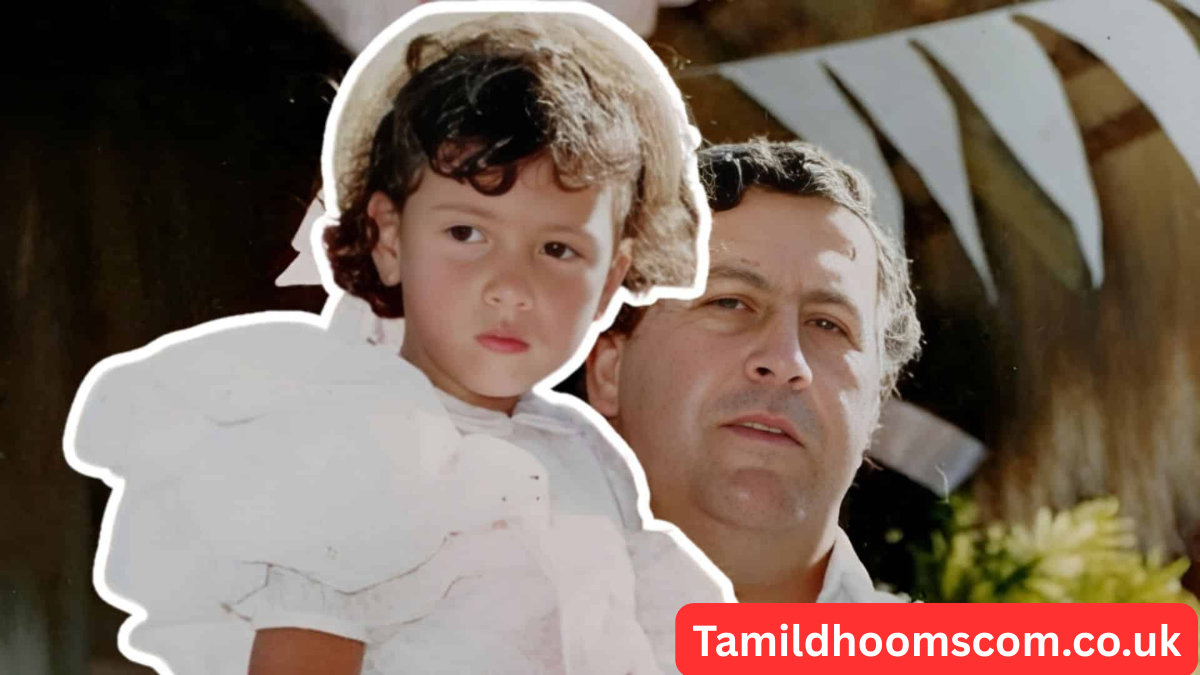
Early Life and Background of Manuela Escobar
Manuela Escobar is widely known as the daughter of Pablo Escobar, one of the most infamous figures in modern history. Her early life was shaped almost entirely by circumstances she never chose, yet had to live through from the moment she was born. Growing up in a world surrounded by immense wealth, danger, and secrecy, her childhood was far from ordinary. While many children experience stability and routine, her early years were marked by constant movement, protection, and an atmosphere of uncertainty.
She was born in Colombia during a time when her father’s influence was at its peak. Pablo Escobar’s empire made him both extremely powerful and highly dangerous, which inevitably affected every member of his family. Despite his controversial legacy, within his home he was known to be deeply affectionate toward his daughter. Numerous accounts suggest that Manuela was especially cherished by him, often being treated with extraordinary care and attention.
However, this unusual upbringing came with serious consequences. The family lived under constant threat, not just from law enforcement but also from rival groups and shifting political pressures. This forced them into a lifestyle where privacy was not just preferred but necessary for survival. As a result, Manuela’s early memories are believed to be tied closely to hiding, relocating, and adjusting to rapidly changing environments.
Family Influence and Relationship with Pablo Escobar
The relationship between Manuela Escobar and her father has often been described as one of intense emotional closeness. Pablo Escobar was known to be a family-oriented man within his household, and his daughter reportedly held a special place in his life. Despite his public image, he was said to be gentle and highly attentive toward her, often going to extreme lengths to fulfill her wishes.
One widely shared anecdote illustrates the extent of his affection: it is said that he once burned large amounts of money just to keep her warm during a hiding period when they were in harsh conditions. Whether fully accurate or partially symbolic, stories like this reflect how deeply intertwined his identity as a father was with his life outside the law. For Manuela, these moments likely created a complex emotional foundation.
At the same time, her relationship with her father cannot be separated from the reality of his actions and their consequences. While she experienced love and luxury, the world around her was filled with fear, violence, and instability caused by his empire. This duality creates a deeply complicated narrative where affection and danger coexist in the same household, shaping her understanding of life from a very young age.
Life After Pablo Escobar’s Death
After Pablo Escobar was killed in 1993, Manuela Escobar’s life changed dramatically. The fall of her father’s empire meant that the family could no longer rely on the protection, wealth, or influence they once had. Instead, they were forced into a life of anonymity, constantly moving and attempting to rebuild their identity away from the shadow of Escobar’s name.
This period was particularly challenging because it required a complete reinvention of who they were. The family reportedly changed identities and relocated multiple times in search of safety and stability. For a young child like Manuela, this meant adapting to unfamiliar surroundings repeatedly while trying to make sense of a world that had already been turned upside down.
Unlike many public figures who grow up in stable environments before gaining fame, Manuela’s life trajectory moved in the opposite direction. She transitioned from extreme visibility and notoriety into complete obscurity. This shift created a long-lasting impact on her personal development, as she had to learn how to live without the protection and structure her father once provided.
Education and Private Development
Manuela Escobar’s education has remained largely private, which aligns with her family’s decision to stay away from public attention. After the death of her father, maintaining privacy became essential for safety reasons. As a result, very little confirmed information exists about her schooling or academic achievements.
It is widely believed that she received education under protective circumstances, possibly through private tutoring or institutions that prioritized confidentiality. This type of learning environment would have been necessary to ensure both her safety and emotional well-being. Unlike typical school experiences, hers likely involved limited exposure to public interaction and a controlled social environment.
Despite the lack of public details, it is reasonable to assume that her education also focused on rebuilding identity and emotional resilience. Growing up with such a complex background would require more than academic instruction; it would also involve psychological adaptation. Learning how to navigate a world where her last name carried both historical weight and public curiosity would have been a central part of her development.
Public Image and Media Attention
Even though Manuela Escobar has lived most of her life away from public view, she continues to attract media attention due to her father’s legacy. The fascination with Pablo Escobar’s life extends naturally to his family, especially his only daughter, who represents a deeply human connection to a controversial historical figure.
However, Manuela herself has made very limited public appearances, choosing instead to maintain privacy. This decision reflects a clear desire to distance herself from the notoriety associated with her family name. In an era where social media often encourages constant visibility, her absence from public platforms is notable and intentional.
The media’s interest in her life often raises ethical questions about privacy versus public curiosity. While her story is undeniably connected to a globally recognized figure, she herself did not choose that legacy. This creates a tension between historical interest and personal boundaries, making her one of the most private individuals connected to such a widely known name.
Psychological and Emotional Impact of Her Childhood
Growing up as the daughter of Pablo Escobar inevitably had psychological implications for Manuela Escobar. Her early environment was defined by instability, danger, and emotional intensity. Such conditions can deeply influence a person’s perception of trust, safety, and identity formation during developmental years.
Children exposed to high-stress environments often develop coping mechanisms that help them navigate uncertainty. In Manuela’s case, these coping mechanisms may have included emotional withdrawal, strong attachment to close family members, or a preference for privacy later in life. While she has not publicly spoken in detail about her experiences, the circumstances of her upbringing suggest a complex emotional landscape.
As she transitioned into adulthood, the need to separate her identity from her father’s legacy likely became even more important. Rebuilding a sense of self outside of public narrative pressure is a challenging process for anyone, and even more so for someone with such a globally recognized surname. Her decision to remain private may be closely tied to this emotional reconstruction.
Changing Identity and Life in Seclusion
One of the most discussed aspects of Manuela Escobar’s life is her reported decision to live under a different identity. After the collapse of her father’s empire, the Escobar family faced significant risks, which made anonymity essential. This led to efforts to completely detach from the name that once defined them publicly.
Living under a new identity allowed her to avoid unwanted attention and potential threats. It also provided a chance to build a life that was not constantly influenced by historical associations. This kind of transformation is not just administrative but deeply personal, as it involves redefining how one interacts with the world.
Seclusion, in her case, is not necessarily about isolation but about protection and peace. Choosing privacy in a world where her name carries global recognition is a powerful decision. It reflects a desire to live a life that is not constantly interpreted through the lens of her father’s actions, but rather through her own existence as an individual.
Relationship with Public Memory of Pablo Escobar
The legacy of Pablo Escobar remains one of the most discussed topics in modern history, often portrayed in documentaries, series, and books. This continued public interest inevitably affects how people perceive his family, including Manuela Escobar. Even if she remains private, her identity is often indirectly shaped by how the world remembers her father.
This connection places her in a unique position where personal identity and historical narrative overlap. While she did not participate in her father’s activities, she is still linked to the consequences and public fascination surrounding them. This creates a lifelong association that is difficult to fully escape, regardless of personal choices.
At the same time, modern portrayals of Pablo Escobar often blur the line between historical reality and dramatized storytelling. This can further complicate public perception of his family, as fictionalized versions of events may influence how people view real individuals connected to him. For Manuela, maintaining distance from these narratives is likely essential for preserving her own sense of identity.
Financial Situation and Lifestyle After Escobar’s Empire
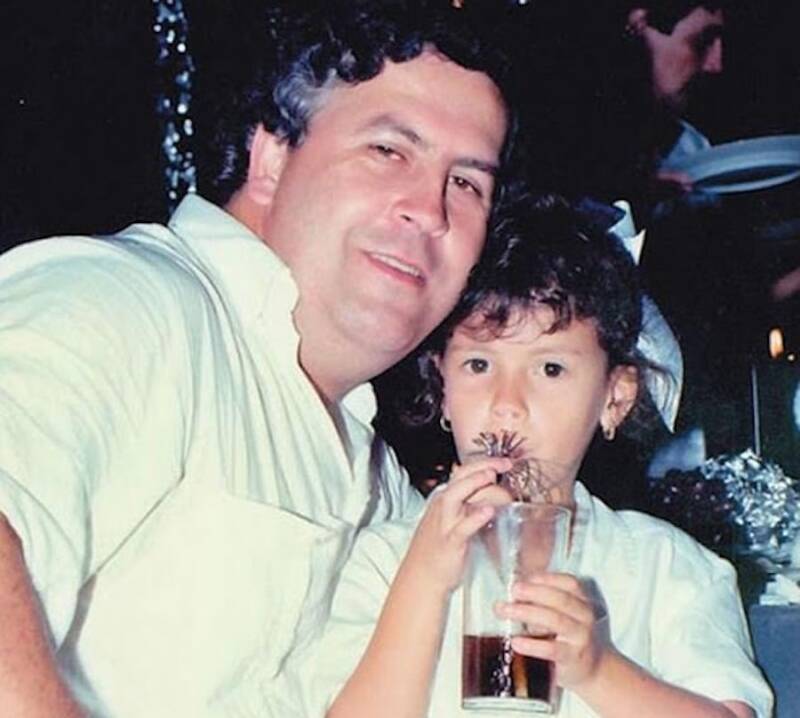
After the collapse of Pablo Escobar’s empire, the family reportedly lost access to the vast wealth that once defined their lifestyle. This sudden change required them to adapt to a completely different financial reality. From extreme affluence, they moved toward a more modest and protected way of living.
There have been various claims and rumors about hidden wealth or remaining assets, but none of these have been publicly confirmed in relation to Manuela Escobar’s current life. What remains consistent, however, is the understanding that she does not live a public life of luxury or visibility. Instead, her focus appears to be on privacy and stability rather than material display.
This transition highlights a broader truth about inherited legacies: wealth and influence can disappear quickly when built on unstable foundations. For Manuela, the post-Escobar era represents not just financial change but a complete restructuring of life priorities, away from power and toward personal security.
Media Representation and Cultural Interest
Manuela Escobar has been indirectly represented in various media formats, mostly through documentaries and dramatized portrayals of her father’s life. However, these representations are often limited and do not focus deeply on her personal experiences. Instead, she is usually shown as part of a broader narrative surrounding Pablo Escobar’s life and downfall.
This type of representation raises important questions about storytelling ethics. When real individuals are included in historical narratives, especially without their active participation, it becomes difficult to balance public interest with personal privacy. Manuela’s case highlights this challenge clearly, as she remains a private figure within a highly publicized story.
Despite this, cultural interest in her life persists. People are often curious about what happens to the families of infamous figures after major historical events. This curiosity keeps her name relevant in discussions, even though she does not actively participate in public discourse or media engagement.
Current Life and Privacy Choices
Today, Manuela Escobar is believed to live a private and quiet life, far removed from the attention associated with her family name. She has made a consistent effort to stay out of the public eye, avoiding interviews, social media exposure, and public appearances. This level of privacy suggests a strong commitment to personal boundaries.
Her current lifestyle is not publicly documented in detail, which is intentional. Unlike many individuals connected to historical figures, she has chosen not to leverage her background for public recognition or media presence. Instead, she appears to prioritize anonymity and emotional stability.
This decision reflects a broader theme of reclaiming identity. By choosing privacy, she defines herself outside of inherited narratives and public expectations. Her life today represents a quiet departure from a highly visible past, focusing instead on personal autonomy and separation from historical associations.
Conclusion: Understanding Manuela Escobar Beyond Her Last Name
Manuela Escobar’s story is not just about being the daughter of Pablo Escobar; it is about navigating identity under extraordinary circumstances. Her life reflects the complexities of growing up in a world shaped by power, controversy, and global attention, followed by a deliberate retreat into privacy and anonymity.
While public curiosity about her remains strong, her choices emphasize the importance of personal boundaries and self-definition. She represents a rare case where someone connected to global notoriety has successfully maintained a largely private existence despite ongoing interest.
Ultimately, understanding Manuela Escobar requires separating her identity from the historical weight of her father’s legacy. Her life is not defined solely by where she came from, but also by how she chose to live afterward—quietly, privately, and away from the narratives that once surrounded her.
FAQs
Who is Manuela Escobar? She is the daughter of Pablo Escobar and is known for maintaining a private life away from public attention.
Where does Manuela Escobar live now? She is believed to live a private life in seclusion, away from media exposure.
Did Manuela Escobar inherit Pablo Escobar’s wealth? There is no confirmed evidence that she has access to or controls her father’s former wealth.
Why is Manuela Escobar not in the media? She has chosen to live privately to avoid attention linked to her father’s legacy.
Is Manuela Escobar active on social media? She does not maintain any verified public social media presence.
Also read: Elliot Kingsley: Life, Background, Career, and Untold Story