
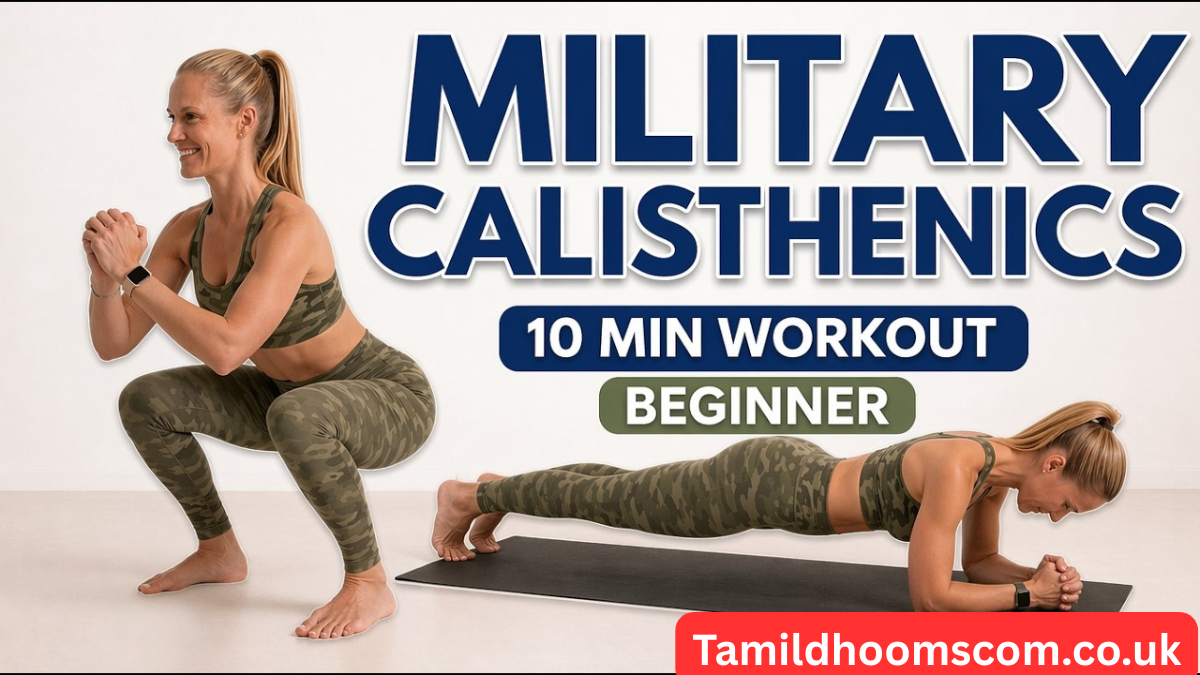
Introduction to Military Calisthenics
Military calisthenics is a structured form of bodyweight training designed to build strength, endurance, discipline, and functional fitness using minimal or no equipment. It is heavily inspired by physical conditioning routines used in armed forces around the world, where soldiers must remain strong, agile, and resilient in any environment. Unlike gym-based training that relies on machines and external weights, this system emphasizes mastering your own body as the primary resistance tool.
At its core, military calisthenics is not just about performing push-ups, sit-ups, or pull-ups. It is a complete physical preparation system that combines movement efficiency, muscular endurance, cardiovascular conditioning, and mental toughness. It trains the body to perform under fatigue, stress, and unpredictable conditions, which is why it has remained a staple in military training programs for decades.
What makes military calisthenics especially appealing today is its accessibility. You don’t need expensive equipment or a gym membership to get started. A small space and consistency are enough. However, the simplicity of the system should not be mistaken for ease. When performed correctly and progressively, it can become one of the most challenging and rewarding fitness methods available.
Another defining feature of military calisthenics is its scalability. Beginners can start with basic movements like knee push-ups or assisted squats, while advanced trainees can progress to explosive push-ups, muscle-ups, and high-volume endurance circuits. This adaptability makes it suitable for all fitness levels, from complete beginners to elite athletes and tactical professionals.
Historical Background and Evolution
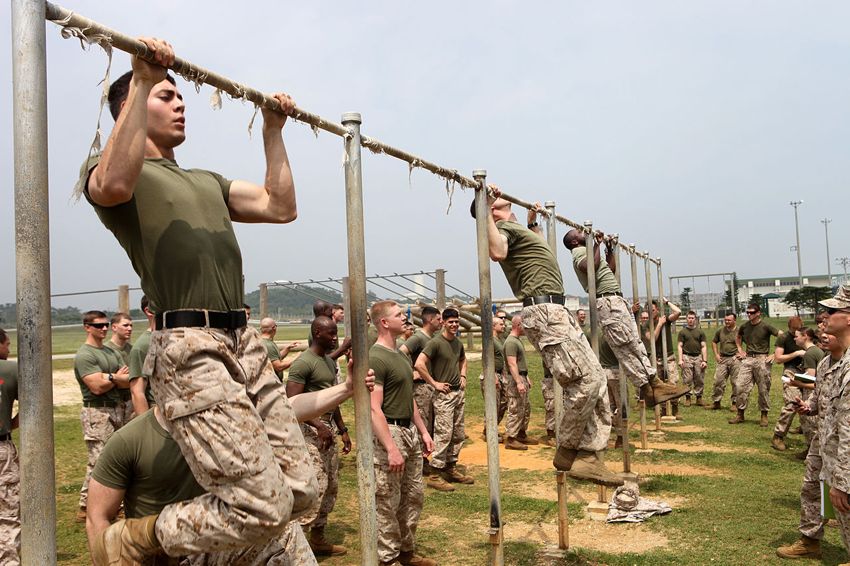
Military calisthenics has deep historical roots that trace back to ancient civilizations where physical conditioning was essential for survival and warfare. Greek and Roman soldiers, for example, relied heavily on bodyweight exercises to prepare for combat. Training routines included running, jumping, wrestling, and controlled body resistance movements to build battlefield readiness.
As modern military forces developed, structured physical training became a formal requirement. During the 19th and 20th centuries, armies around the world began standardizing calisthenic drills to ensure soldiers could perform physically demanding tasks such as marching long distances, carrying heavy equipment, and engaging in hand-to-hand combat. These routines became more systemized and disciplined over time.
In the 20th century, especially during and after World War periods, military training manuals started incorporating repetitive calisthenic drills like push-ups, sit-ups, squats, and running circuits. The goal was not aesthetic fitness but functional endurance. Soldiers needed to be strong enough to survive long missions under extreme physical and mental pressure, often with minimal recovery time.
Today, military calisthenics has evolved beyond armed forces and is widely used in general fitness, sports conditioning, and tactical training programs. It has also influenced modern workout systems such as HIIT (High-Intensity Interval Training) and functional fitness programs. Despite modernization, the core principles remain unchanged: simplicity, discipline, and consistent progression.
Core Principles of Military Calisthenics
One of the foundational principles of military calisthenics is progressive overload using bodyweight. Since external weights are not the primary tool, progression is achieved by increasing repetitions, reducing rest time, improving form strictness, or advancing to more difficult movement variations. This ensures continuous adaptation and strength development.
Another key principle is movement efficiency. Military calisthenics teaches individuals to perform exercises with control, proper alignment, and full range of motion. The focus is not just on completing repetitions but on maintaining quality under fatigue. This helps reduce injury risk while improving real-world physical performance.
Discipline and consistency are also central to this training method. Military-style workouts often involve high repetition sets, timed circuits, and minimal rest intervals. This structure trains both the body and mind to perform even when uncomfortable. Over time, this builds mental resilience, which is just as important as physical strength in demanding environments.
Lastly, balance across muscle groups is emphasized. A proper military calisthenics routine does not overdevelop one area while neglecting another. Push, pull, legs, and core movements are integrated into structured sessions to ensure full-body functionality. This balanced approach supports endurance, posture, and overall athletic performance.
Warm-Up and Mobility Training
A proper warm-up is essential in military calisthenics because the training often involves high-intensity and repetitive movements. Without adequate preparation, the risk of injury increases significantly. A good warm-up gradually increases heart rate, loosens joints, and activates major muscle groups.
Dynamic movements are commonly used in warm-ups. These may include arm circles, leg swings, light jogging, jumping jacks, and controlled bodyweight squats. The goal is to prepare the body for explosive and sustained activity. Unlike static stretching, dynamic mobility work enhances performance rather than temporarily relaxing muscles.
Mobility training also plays a crucial role in long-term progress. Soldiers and athletes need functional flexibility, not just passive stretching ability. Exercises that improve shoulder, hip, and ankle mobility help ensure smoother movement patterns during push-ups, squats, lunges, and running drills.
A well-structured warm-up routine also helps improve mental focus. Military calisthenics is as much about mindset as physical execution. Taking time to prepare mentally allows individuals to transition from rest mode into training mode, increasing performance quality and reducing careless mistakes during exercises.
Upper Body Exercises
Upper body training in military calisthenics is heavily focused on push-ups, pull-ups, dips, and variations of these foundational movements. Push-ups are often the most frequently used exercise because they develop the chest, shoulders, triceps, and core simultaneously. Variations such as wide push-ups, diamond push-ups, and decline push-ups increase difficulty and muscle engagement.
Pull-ups are another essential movement, targeting the back, biceps, and grip strength. They are considered a benchmark exercise in military fitness assessments. Progressions can include assisted pull-ups, negative reps, and eventually explosive or weighted variations for advanced trainees.
Dips are particularly effective for building triceps strength and shoulder stability. They require parallel bars or stable surfaces, but they offer significant strength development for pushing movements. In military training environments, dips are often performed in high-volume sets to build endurance under fatigue.
Upper body calisthenics is not just about strength but also endurance. Military routines often require performing multiple sets with minimal rest. This builds muscular stamina, ensuring that soldiers can continue performing tasks even after extended physical exertion.
Lower Body Conditioning
Lower body training in military calisthenics is essential for mobility, endurance, and power generation. Exercises such as squats, lunges, step-ups, and calf raises form the foundation of leg conditioning. These movements are often performed in high repetitions to simulate long-duration physical demands like marching or carrying equipment.
Squats are particularly important because they engage multiple muscle groups including quadriceps, hamstrings, glutes, and core stabilizers. Bodyweight squats are often performed in large sets to build endurance, while variations like jump squats add explosive power development.
Lunges help improve balance, coordination, and unilateral strength. They are especially useful in military training because real-world movement often involves uneven terrain and unpredictable footing. Forward, reverse, and walking lunges all contribute to functional lower body strength.
Lower body conditioning also includes endurance-based drills such as running, sprint intervals, and stair climbing. These activities enhance cardiovascular capacity while strengthening the legs. In military calisthenics, leg training is not isolated but integrated into full-body conditioning routines.
Core Strength Development
Core strength is a critical component of military calisthenics because it stabilizes the entire body during movement. Exercises such as sit-ups, planks, leg raises, and mountain climbers are commonly used to build abdominal endurance and spinal stability.
Sit-ups are often performed in high repetition sets in military training. While controversial in some fitness circles due to potential strain, when performed correctly, they help build endurance in the abdominal muscles. Proper form is essential to avoid unnecessary stress on the lower back.
Planks are another foundational core exercise that develops static strength and stability. Unlike dynamic movements, planks train the body to maintain alignment under tension. This is especially important in military settings where maintaining posture under load is critical.
Core training in military calisthenics also includes dynamic movements like mountain climbers and flutter kicks. These exercises combine cardiovascular conditioning with abdominal engagement, making them highly effective for overall endurance development.
Endurance and Conditioning Circuits
Military calisthenics heavily relies on circuit-based training to build endurance. These circuits involve performing multiple exercises back-to-back with minimal rest. The goal is to simulate fatigue conditions similar to real-life physical demands in military operations.
A typical circuit may include push-ups, squats, sit-ups, and running intervals repeated for several rounds. This structure challenges both muscular endurance and cardiovascular capacity simultaneously. Over time, the body adapts to sustain effort for longer durations.
High-intensity interval training is often incorporated into military calisthenics circuits. Short bursts of maximum effort followed by brief recovery periods help improve stamina and recovery efficiency. This method also enhances mental toughness by training individuals to push through discomfort.
Conditioning circuits are not only physically demanding but also mentally challenging. They require focus, discipline, and pacing strategy. Learning how to manage energy output across multiple rounds is a key skill in military-style fitness training.
Progressions and Scaling Methods
Progression in military calisthenics is achieved through structured scaling rather than external weights. Beginners often start with modified movements such as knee push-ups or assisted pull-ups before advancing to full versions of the exercises.
Once basic strength is established, intensity can be increased through higher repetitions, slower tempo, or reduced rest time. These methods ensure continuous overload without needing equipment. This makes the system highly adaptable and sustainable.
Advanced practitioners often progress to explosive movements like clap push-ups, muscle-ups, and pistol squats. These exercises require not only strength but also coordination, balance, and body control. Mastery of foundational movements is essential before attempting these variations.
Scaling also includes increasing workout density, meaning more work is completed in less time. This approach enhances both strength and endurance while simulating the time-pressured nature of military physical demands.
Training Programming and Weekly Plans
A well-structured military calisthenics program typically follows a balanced weekly schedule that includes strength, endurance, and recovery sessions. Training is often divided into push, pull, legs, and full-body conditioning days.
Rest and recovery are essential components of programming. While military training emphasizes intensity, it also recognizes the importance of allowing the body to repair and adapt. Without recovery, performance declines and injury risk increases.
Weekly plans often include a mix of steady-state endurance work like running and high-intensity circuit training. This combination ensures comprehensive physical development, covering both aerobic and anaerobic systems.
Consistency is more important than perfection in programming. Even simple routines performed regularly can produce significant improvements over time. Military calisthenics thrives on repetition, discipline, and gradual progression rather than complex variations.
Nutrition and Recovery for Calisthenics Training
Nutrition plays a vital role in supporting military calisthenics performance. A balanced diet that includes adequate protein, carbohydrates, and healthy fats helps fuel workouts and promote muscle recovery. Hydration is equally important, especially during high-intensity sessions.
Protein intake supports muscle repair and growth, while carbohydrates provide energy for endurance training. Healthy fats contribute to hormonal balance and long-term energy availability. Together, these nutrients support sustained physical performance.
Recovery is just as important as training itself. Sleep, hydration, and rest days allow the body to rebuild stronger after intense workouts. Without proper recovery, progress slows and fatigue accumulates over time.
Active recovery methods such as walking, stretching, or light mobility work can also improve circulation and reduce muscle stiffness. Military calisthenics emphasizes sustainability, meaning recovery practices are essential for long-term success.
Common Mistakes and How to Avoid Them
One of the most common mistakes in military calisthenics is sacrificing form for speed or repetition count. While high volume is important, poor form can lead to injuries and reduce training effectiveness. Quality should always come before quantity.
Another mistake is neglecting progression. Many people repeat the same exercises without increasing difficulty over time. This leads to plateaus and stagnation. Structured progression is necessary for continuous improvement.
Overtraining is also a frequent issue, especially for beginners. Military-style workouts can be intense, but without proper recovery, the body cannot adapt effectively. Balancing intensity with rest is crucial for long-term success.
Lastly, many trainees ignore mobility and warm-up routines. Skipping these steps increases injury risk and reduces performance quality. Proper preparation ensures safer and more effective training sessions.
Benefits and Real-World Applications
Military calisthenics offers a wide range of physical and mental benefits. Physically, it improves strength, endurance, flexibility, and coordination. Since it uses bodyweight movements, it also enhances functional fitness that translates into real-world activities.
Mentally, it builds discipline, resilience, and focus. The demanding nature of high-repetition and circuit-based training teaches individuals how to perform under pressure and fatigue. This mental toughness is valuable in both athletic and everyday life situations.
Another major benefit is accessibility. Because it requires minimal equipment, military calisthenics can be performed almost anywhere. This makes it ideal for people with limited access to gyms or those who prefer outdoor training environments.
In real-world applications, this training method is used not only in military preparation but also in sports conditioning, emergency response training, and general fitness programs. Its versatility and effectiveness make it one of the most practical fitness systems available today.
FAQs
What is military calisthenics
A bodyweight training system focused on strength, endurance, and functional fitness inspired by military physical training.
Can beginners start military calisthenics
Yes, beginners can start with modified exercises and gradually progress to more advanced movements.
Do I need equipment for military calisthenics
No, most exercises use only bodyweight, though pull-up bars or parallel bars can be helpful.
How often should I train military calisthenics
Most people benefit from training 3 to 5 days per week depending on intensity and recovery.
Is military calisthenics good for weight loss
Yes, it burns calories effectively due to its high-intensity and full-body engagement.
Can I build muscle with military calisthenics
Yes, progressive overload and consistency can lead to significant muscle development.
How long does it take to see results
Noticeable improvements often appear within a few weeks of consistent training.
Is military calisthenics safe for everyone
Generally yes, but proper form and progression are essential to avoid injury.
What is the hardest exercise in military calisthenics
Movements like muscle-ups and pistol squats are considered advanced and highly challenging.
Can I combine military calisthenics with gym training
Yes, it can complement weight training for balanced strength and conditioning.
Also read: Renee Rapp Height: Everything You Need to Know About Her Real Stature and On-Screen Presence